
The wind
At Le Morne, the prevailing south-easterly trade wind is generally stronger in the early afternoon.
The spot
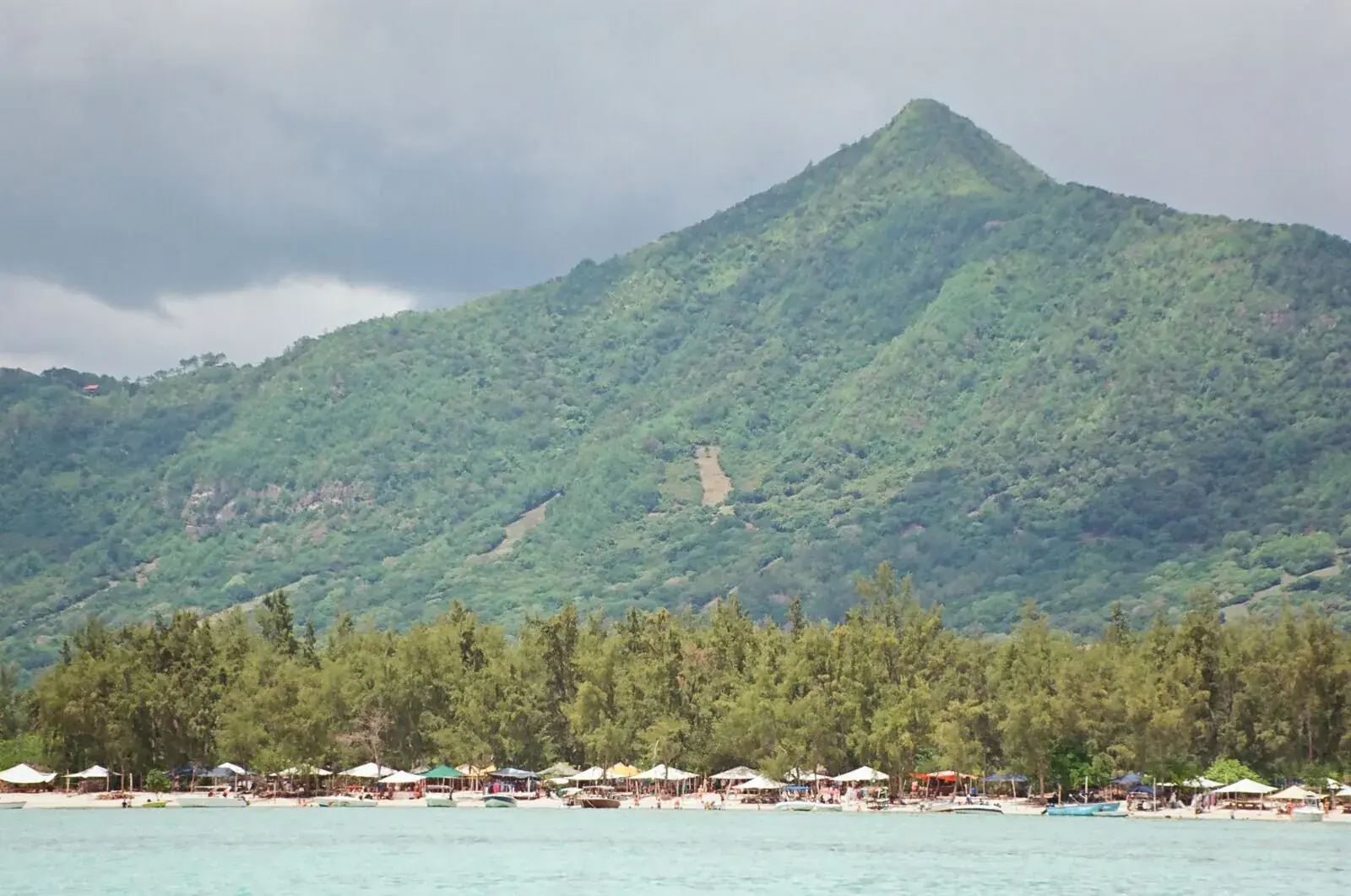
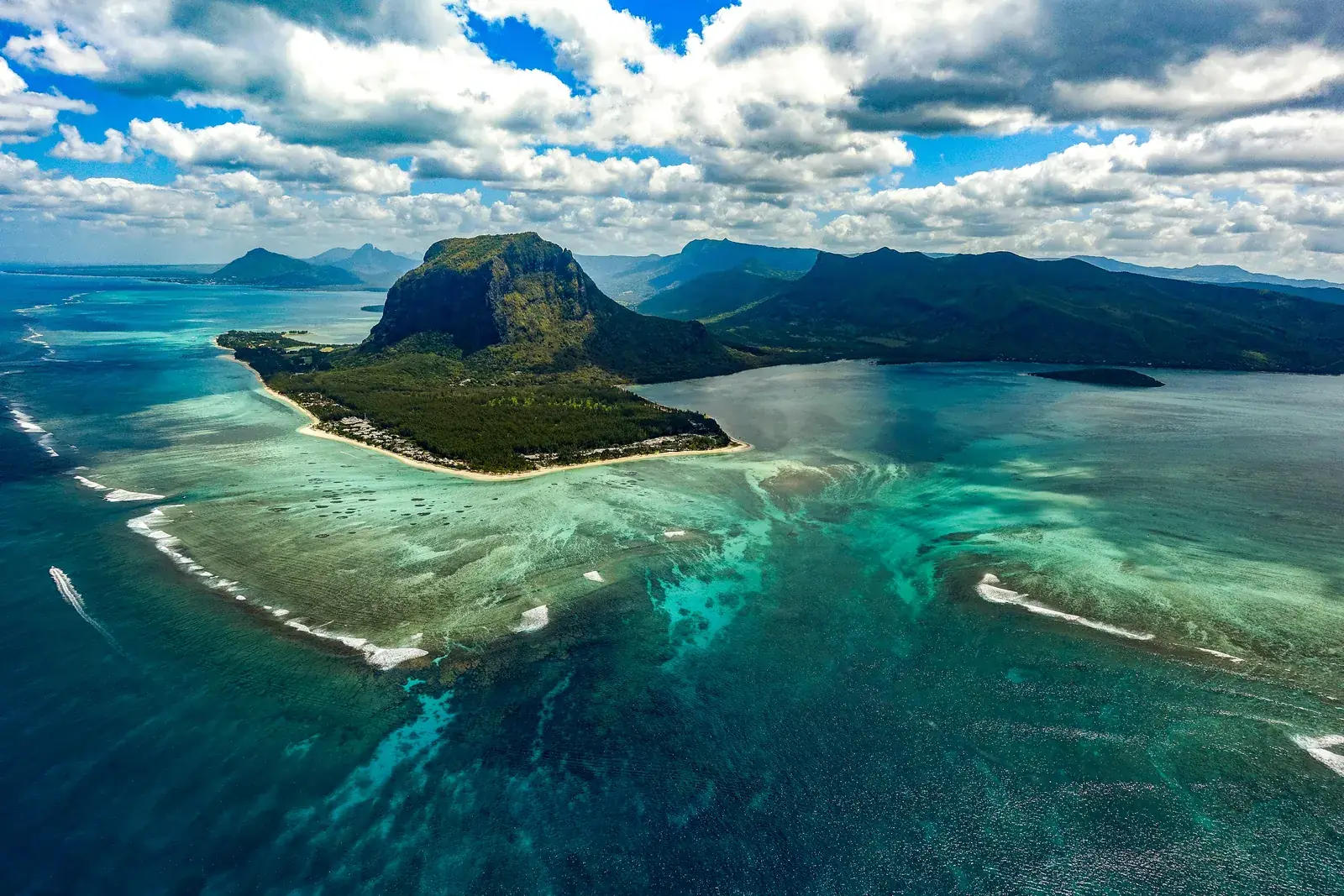
Mauritius was formed by volcanic activity around 8 million years ago. Today, an almost continuous coral reef surrounds the island, creating a shallow lagoon protected from the large Indian Ocean swells and providing an ideal setting for learning to kitesurf safely.
Le Morne, a UNESCO World Heritage Site, owes its dramatic landscape to this volcanic origin. Its peninsula creates a stretch of water that is both windy and sheltered, unlike anywhere else on the island.
Coral reefs are a fragile ecosystem. They support much of Mauritius' marine life and protect the coastline from erosion. When riding, we stay over sandy areas and make sure the equipment never touches the coral.
Weather & wind
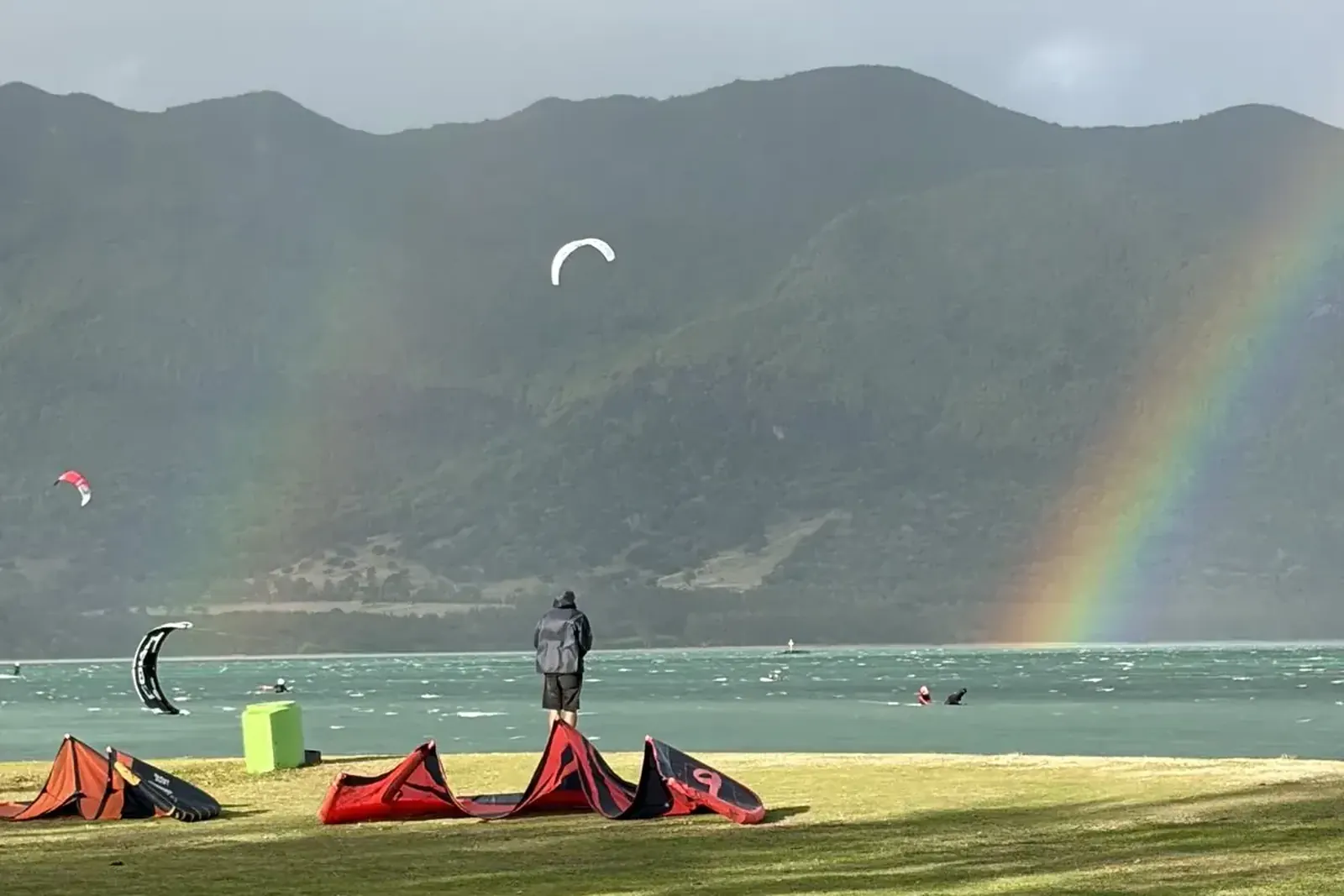
At Le Morne, the prevailing south-easterly trade wind is generally stronger in the early afternoon. Our instructors check the conditions before every session and choose equipment suited to the wind strength and your level.
Le Morne lagoon is protected by the coral reef. The water is flat and free from large waves, making it an ideal place to learn.
Before entering the water
At Le Morne, the prevailing south-easterly trade wind is generally stronger in the early afternoon.
The inside of the lagoon remains flat. Surfable waves are found offshore beyond the reef, with coaching adapted to each person's level.
Being able to swim is better; buoyancy vests are available. Give way to the surfer already riding the wave and keep a safe distance from other water users.
Wind at Le Morne
Conditions observed by the school to help you choose the period best suited to your level. These figures are for kitesurfing: wingfoiling needs fewer knots.
| Month | Average wind | Rideable days | Water | Best for | Season |
|---|---|---|---|---|---|
| January | 7–12 knots | 5–10 / 31 | 27 °C · rash vest | Beginners | Low season |
| February | 5–10 knots | 0–7 / 28 | 27 °C · rash vest | Beginners | Low season |
| March | 10–17 knots | 10–20 / 31 | 27 °C · rash vest | All levels | Start of season |
| April | 10–20 knots | 10–22 / 30 | 27 °C · rash vest | All levels | Start of season |
| May | 10–22 knots | 10–22 / 31 | 26 °C · short wetsuit | All levels | Mid-season |
| June | 15–30 knots | 15–25 / 30 | 25 °C · full wetsuit | All levels | Peak season |
| July | 15–33 knots | 15–25 / 31 | 24 °C · full wetsuit | All levels | Peak season |
| August | 15–33 knots | 20–30 / 31 | 24 °C · full wetsuit | All levels | Peak season |
| September | 15–33 knots | 20–30 / 30 | 26 °C · full or short wetsuit | All levels | End of season |
| October | 15–30 knots | 10–20 / 31 | 26 °C · short wetsuit | All levels | End of season |
| November | 12–20 knots | 7–12 / 30 | 27 °C · rash vest | All levels | End of season |
| December | 10–17 knots | 5–10 / 31 | 27 °C · rash vest | Beginners | End of season |
Data provided by Ritik, Born To Kite. Nature remains unpredictable and conditions can vary from one year to the next.
Ritik's advice
The wind generally blows from 7:00 am to 6:30 pm and is stronger in the early afternoon. It also depends on the tide and increases as the tide rises.
From November to April, the school adapts to the conditions. If there is not enough wind, the session is refunded or rescheduled, or we may move to another spot.
December, January and February are the low season: you can kite, but on fewer days in the month and less regularly.
The lagoon is busier from May to September and starts to become quieter from late September.
The rider who is downwind always has priority.
Never pass between a rider and their kite or over their lines.
If in doubt, slow down and give way.